What Is Brand Architecture? A Clear Explanation for Leaders
Published on
Reading Time
4 mins
If you are new to branding, the terminology can feel overwhelming. One of the first concepts leaders grapple with is brand architecture. It sounds abstract, almost academic, yet it has a direct impact on how customers understand your business and how your organisation grows.
So what is brand architecture, why does it matter, and how should businesses approach it?
What brand architecture actually means
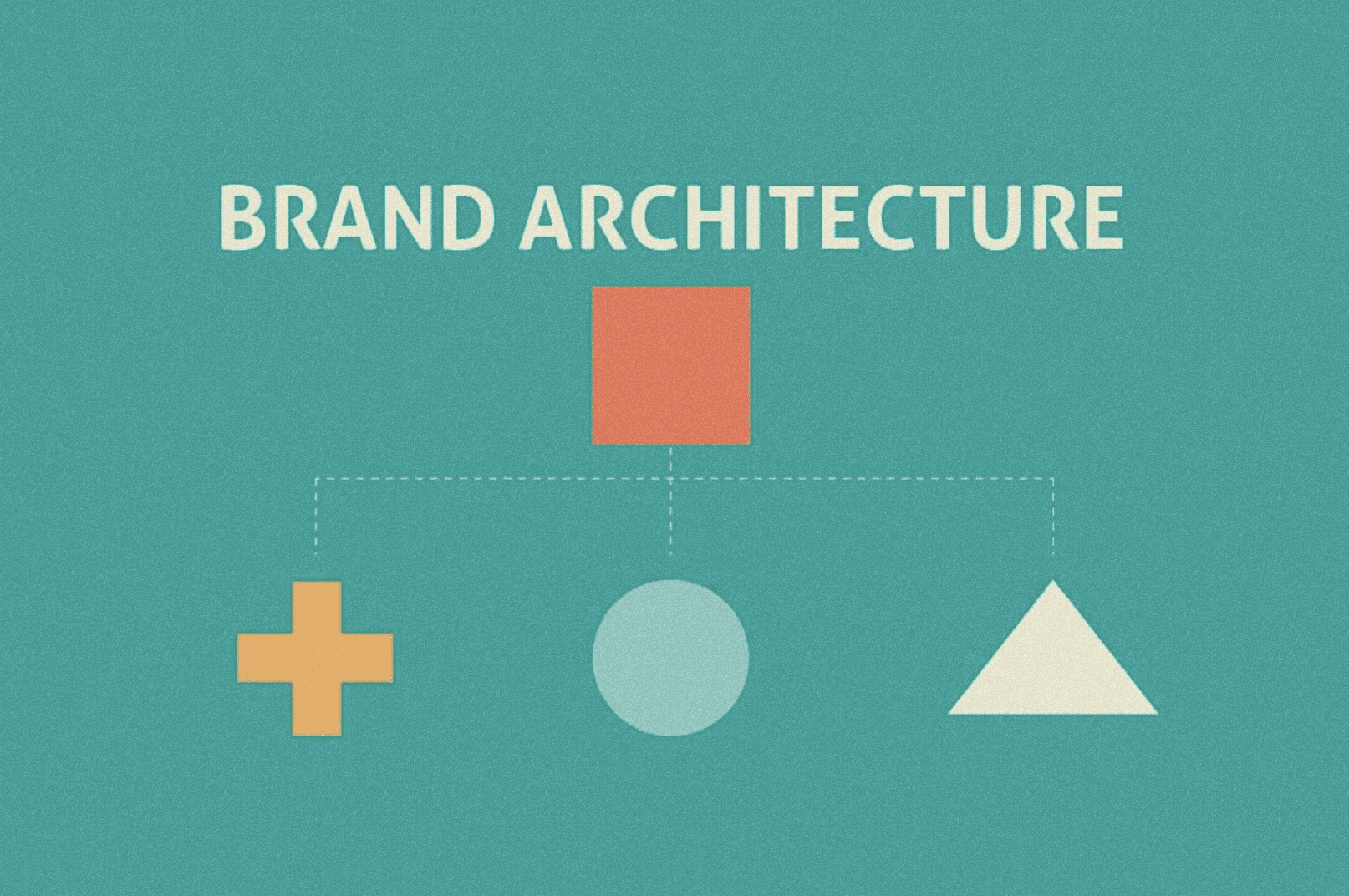
Brand architecture is the strategic framework that defines how your brands, sub-brands, products and services relate to one another. It gives your organisation structure, clarity and coherence. Without a clear architecture, brands compete internally, messaging becomes inconsistent and customers struggle to understand how your offering fits together.
A well-considered brand architecture helps audiences navigate your portfolio with confidence. It supports growth, avoids unnecessary complexity and strengthens how your organisation shows up in the market. At its core, brand architecture helps customers understand the story your business is telling and where each brand sits within that story.
Key questions brand architecture helps you answer
Clear brand architecture gives structure to the decisions that often feel ambiguous or politically sensitive. It helps clarify:
What overarching brand approach you use. Are you building a master brand, a set of independent brands, an endorsed structure, or a hybrid?
Where each product, service or sub-brand sits within that structure.
How each brand influences the others in terms of messaging, personality and perception.
Which brands should lead and which should support.
How naming works across your organisation and what types of names you use.
How each brand should show up across digital, print, packaging, signage and internal materials.
These decisions shape how customers experience your business and how teams make choices internally.

The four main types of brand architecture
Different organisations adopt different structures depending on their goals, product ranges and growth plans. The four most common brand architecture models are:
1. Branded House
A single master brand leads everything. All products and services sit beneath one coherent identity and benefit from the equity of the parent brand. This creates strength, recognition and efficiency.
Examples include Google (Google Search, Google Drive, Google Maps) and FedEx (FedEx Express, FedEx Ground, FedEx Freight).
2. House of Brands
Each brand has its own identity, personality and audience. The parent company is largely invisible to customers.
Examples include Procter & Gamble with Pampers, Tide and Gillette, and Unilever with Dove, Axe and Ben & Jerry’s.
3. Endorsed Brands
Sub-brands have their own identity but are supported by an endorsement from the parent brand, offering reassurance and trust.
Examples include Courtyard by Marriott, Residence Inn by Marriott and Nestlé KitKat.
4. Hybrid Architecture
A combination of models. This is common in organisations with acquisitions or varied product categories.
Examples include Microsoft (Xbox is independent, Microsoft 365 is closely tied to the master brand) and Marriott (Ritz-Carlton as independent, Marriott Hotels as endorsed).
Why brand architecture matters to growing organisations
A clear and intentional architecture offers several benefits:
Stronger brand recognition. Customers understand who you are and what belongs to you.
Better control over perception. You decide how each brand contributes to the whole.
Increased trust and loyalty. Consistency across your portfolio builds credibility.
More efficient marketing. Shared equity and clearer naming reduces cost and effort.
A roadmap for growth. Expansion becomes easier when the structure is already defined.
Brand architecture also plays a significant role in long-term brand strategy. It shapes how you introduce new offerings, how you organise complexity and how you prevent internal competition between brands.
Brand portfolio strategy: making sense of multiple brands
For organisations with several brands, a brand portfolio strategy works alongside brand architecture. While brand architecture defines relationships and structure, portfolio strategy defines purpose.
It helps teams determine:
Which brands serve specific audience segments.
How each brand differentiates itself to avoid overlap.
Where investment should be prioritised.
How new brands or acquisitions should be added into the structure.
How to retire brands with declining relevance.
When portfolio strategy and brand architecture work together, businesses avoid confusion and build a cohesive ecosystem that supports growth.
Brand architecture during mergers and acquisitions
Brand architecture becomes especially important during mergers and acquisitions. These decisions carry financial, cultural and brand risk, so clarity is essential. Key questions include:
Should the acquired brand stay, be merged, or be retired?
What equity does the acquired brand hold and how recognised is it?
How will customers perceive the transition?
Which naming and identity approach keeps the most clarity?
How do we avoid duplication and internal brand conflict?
A considered approach protects brand equity, reduces confusion and creates a smoother transition for staff, partners and customers.
Final thought: clarity before creativity
Brand architecture is not about creating diagrams or filling boxes. It is about clarity. It is about helping your organisation understand the role of every brand you own and the perception you want to build in the market.
Whether you are scaling, diversifying, acquiring or redefining your offer, a clear brand architecture provides the strategic foundation for everything that follows. It ensures that every brand plays a meaningful, intentional role in the bigger picture.